
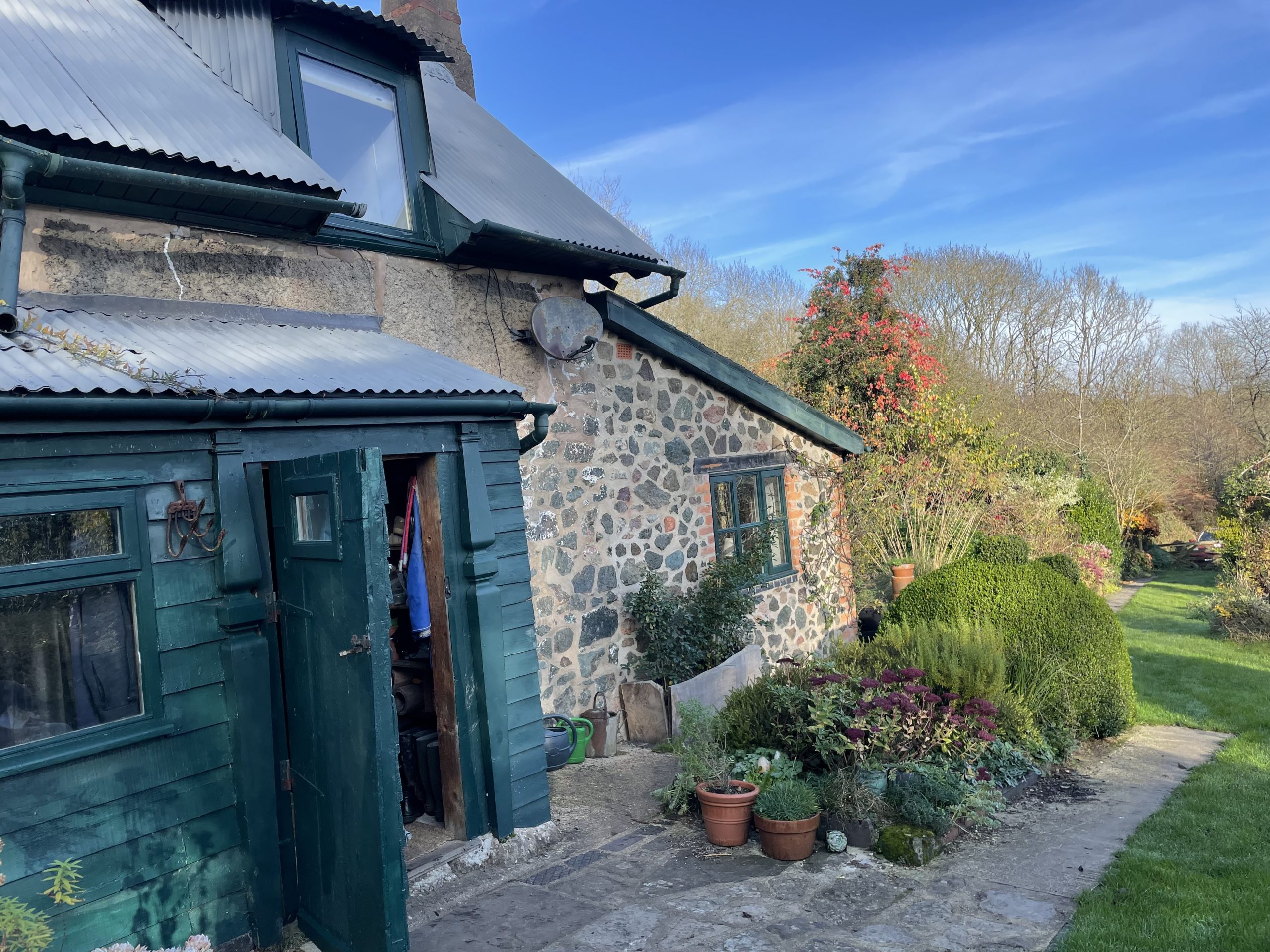
If you live in a Cotswold stone cottage, a Georgian townhouse in Cheltenham or a farmhouse in the Forest of Dean, you’ve probably been told a heat pump “won’t work in a house like this”. We hear it every week, and it’s usually wrong.
The short answer: yes, a heat pump can heat an old stone home well. What matters is that the system is designed around the house, starting with a proper room-by-room heat loss survey, correctly sized radiators and a heat pump matched to the building.
We’ve been heating Gloucestershire homes for over 15 years, and many of them are older than the oldest new-build estate in the county by a couple of centuries. Here’s what we’ve learned.
Why old homes get a bad reputation
Most horror stories about heat pumps in old houses come down to design, not the technology. The common mistakes are:
- Guesswork sizing. A heat pump picked by floor area or by copying the old boiler’s output will be too small (cold rooms) or too big (short cycling and higher bills).
- Keeping undersized radiators. Heat pumps run at lower water temperatures than boilers. Radiators sized for an 80°C boiler may not put out enough heat at 45°C.
- Treating stone like brick. Solid stone walls lose heat differently from cavity walls, and they need to breathe. Wrong assumptions here lead to wrong numbers.
- Poor controls. Heat pumps work best running low and steady. Set up like a boiler, with heating blasting on and off, they cost more to run.
None of these are reasons to rule out a heat pump. They are reasons to choose your installer carefully.
Step one: a proper heat loss survey
Every good heat pump installation in an older home starts with a room-by-room heat loss calculation. It tells us exactly how much heat each room needs on the coldest day of the year, so we can size the heat pump and every radiator correctly.
For a stone property we look at:
- Wall type and thickness (solid stone, rubble-filled, rendered or exposed)
- Roof and loft insulation, including unusual roofs such as old thatch under tin
- Floors, especially suspended timber or flagstone floors
- Windows, doors and draughts
- How you actually use the house: which rooms you heat, and when
As an MCS certified installer (MCS 26427), this design work is part of every job we do. If an installer quotes you a heat pump without visiting and measuring your home, treat it as a warning sign.
Do I need underfloor heating?
No. Underfloor heating suits heat pumps well, but most older homes we work on use radiators, and that’s fine.
Because a heat pump runs at a lower flow temperature than a boiler, some rooms may need a larger radiator, or a double-panel radiator in place of a single. Your heat loss survey shows exactly which ones. In many homes a good number of the existing radiators can stay.
If the house has no central heating at all, like our Castlemorton project below, we design the radiator layout from scratch. That’s often the easiest situation, because every radiator is sized for the heat pump from day one.
Running at lower temperatures also gives a gentler, more even warmth. Thick stone walls hold that heat well once they are warm, which suits a heat pump’s steady, low-and-slow way of working.
Insulation: what helps, and what to avoid
You don’t need to turn a stone cottage into a new-build before fitting a heat pump. A few sensible improvements make the system smaller, cheaper to buy and cheaper to run:
- Loft insulation – usually the easiest and best-value upgrade.
- Draught-proofing – around doors, windows, loft hatches and unused chimneys.
- Floor insulation – worth considering if floors are being lifted anyway.
What to be careful with is solid stone walls. Old stone walls are built to breathe, letting moisture escape. Sealing them with the wrong materials, such as cement render or non-breathable internal insulation, can trap damp. If you’re thinking about wall insulation, use breathable, lime-based or wood-fibre products and take specialist advice.
The good news is that a heat pump’s steady background warmth helps keep old walls dry. That can reduce condensation and mould compared with a house that’s heated in short bursts or left cold.
Listed buildings and conservation areas
Most air source heat pumps in England can be installed without planning permission under permitted development rules. Since May 2025 there’s no longer a fixed 1-metre distance from your boundary. Instead, the unit must meet a noise limit at your neighbours’ windows, which we calculate as part of the design.
There are important exceptions in the Cotswolds:
- Listed buildings – permitted development doesn’t apply. You’ll need planning permission and listed building consent before installing.
- Conservation areas – the outdoor unit can’t go on a wall or roof facing a road, or closer to the road than the house.
- Article 4 areas – some councils remove permitted development rights in specific streets or villages, so it’s always worth checking.
Listed status doesn’t mean no. It means the outdoor unit needs to be placed sensitively, usually out of sight at the back or side of the property, with pipework hidden. We’ll advise on placement and on what your local planning authority is likely to want to see.
Pairing a heat pump with solar PV and a battery
A heat pump runs on electricity, so pairing it with solar panels and a battery can cut running costs further. Solar covers much of your hot water in the summer, and a battery lets you store cheap off-peak electricity to run the heat pump during peak hours in the winter.
This is where our whole-home approach matters. We design the heat pump, solar and battery together, rather than bolting them on one at a time. Not sure where to start? Read our guide: Solar PV, batteries and heat pumps – which to install first?
Case study: a 1750 stone cottage on Castlemorton Common
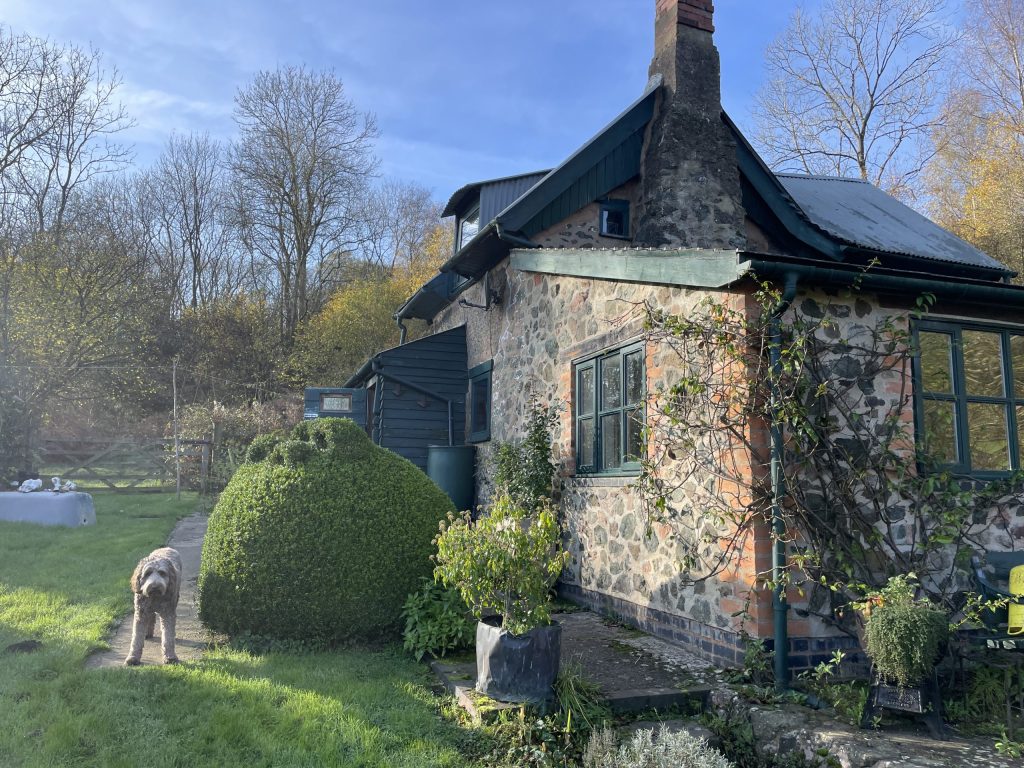
If you want proof that heat pumps work in old houses, this is it. Beverly’s cottage on Castlemorton Common, near Malvern, is a stone-built home dating from around 1750, with corrugated tin sheeting over the original thatch roof.
The starting point. The cottage had no central heating. Roger and Beverly relied on a single log burner, topped up with electric oil heaters when it turned cold. Collecting and storing logs was becoming harder, and she is allergic to some of the moulds that grow in cold, damp conditions. The cottage’s remote location had also put several installers off.
What we installed.
| Heat pump | Stiebel Eltron WPL 17 Classic air source heat pump |
| Radiators | Five new radiators, upstairs and downstairs |
| Hot water | New cylinder in the utility room next to the kitchen |
| Outdoor unit | Behind the house, out of sight and out of earshot |
The result. The heat pump now provides all of the cottage’s heating and hot water. Beverly says she’s “toasty in whichever room she is in” and has plenty of hot water. No more hauling logs, and a steadily warm, drier home.
Read the full Castlemorton Common case study
Grants: up to £9,000 off
The Boiler Upgrade Scheme gives £7,500 off an air source heat pump. If you’re replacing oil or LPG heating in a home that isn’t on mains gas, which describes a lot of rural Cotswold properties, you can currently get £9,000. That higher amount runs until 31 March 2027.
There’s no income test, and we handle the application for you. Find out more in our post: £9,000 heat pump grant for oil and LPG homes in the Cotswolds.
FAQ
Frequently Asked Questions
Do heat pumps work in old houses?
Do heat pumps work in old houses? Yes. With a proper heat loss survey, correctly sized radiators and good controls, a heat pump can comfortably heat an old house, including solid stone homes built centuries ago.
Will my old stone cottage be warm enough with a heat pump? Yes, if the system is designed for your cottage. Our Castlemorton Common customer lives in a stone cottage from around 1750 and is warm in every room.
Do I need to replace all my radiators? Usually not. Some rooms may need larger radiators to work at a heat pump’s lower water temperature. Your heat loss survey shows exactly which ones.
Can I have a heat pump on a listed building? Often, yes. You’ll need planning permission and listed building consent, and the outdoor unit must be placed sensitively. We can advise on what’s likely to be approved.
Do I have to insulate my walls first? No. Loft insulation and draught-proofing are worth doing, but solid stone walls should only be insulated with breathable materials and specialist advice.
Is there a grant? Yes. The Boiler Upgrade Scheme gives £7,500 off, or £9,000 if you’re replacing oil or LPG heating, until 31 March 2027.
Will my old stone cottage be warm enough with a heat pump?
Yes, if the system is designed for your cottage. Our Castlemorton Common customer lives in a stone cottage from around 1750 and is warm in every room.
Do I need to replace all my radiators?
Usually not. Some rooms may need larger radiators to work at a heat pump’s lower water temperature. Your heat loss survey shows exactly which ones.
Can I have a heat pump on a listed building?
Often, yes. You’ll need planning permission and listed building consent, and the outdoor unit must be placed sensitively. We can advise on what’s likely to be approved.
Do I have to insulate my walls first?
No. Loft insulation and draught-proofing are worth doing, but solid stone walls should only be insulated with breathable materials and specialist advice.
Is there a grant?
Yes. The Boiler Upgrade Scheme gives £7,500 off, or £9,000 if you’re replacing oil or LPG heating, until 31 March 2027.
Talk to a local heat pump installer
PBT Installations is an MCS certified, Trustmark approved heat pump installer based in Cheltenham. We’ve worked on homes across Gloucestershire, the Cotswolds, Stroud, Cirencester and the Forest of Dean for over 15 years.
If you live in an older or stone-built home and want to know whether a heat pump is right for it, call us on 01242 323923, email [email protected], or book a free survey.