
A ground source heat pump takes the steady warmth stored in the ground and turns it into heating and hot water for your home. It’s quiet, there’s no fan unit on the outside of the house, and it’s one of the most efficient ways to heat a home. We design and install Stiebel Eltron ground source systems across Cheltenham, Gloucestershire and the Cotswolds.
How a ground source heat pump works
A loop of pipe is buried in your garden, either in shallow trenches or in one or more vertical boreholes. A water and antifreeze mix circulates through the loop and picks up heat from the ground, which stays at a fairly steady temperature, around 10°C, all year round.
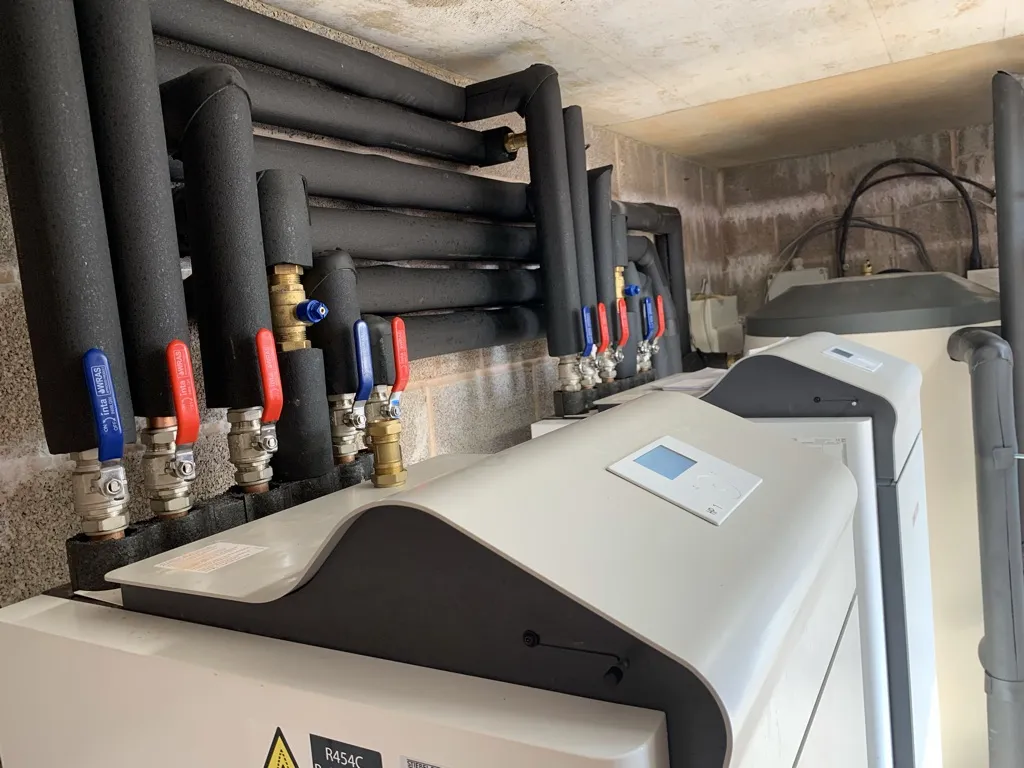
The heat pump indoors raises that heat to the temperature your radiators or underfloor heating need, and heats your hot water cylinder too. Because the ground is warmer than winter air, a ground source system keeps working efficiently on the coldest days, exactly when you need it most.
Is ground source right for your home?
Ground source works especially well for:
- Rural and off-gas homes moving away from oil or LPG
- Larger or older homes with a high heat demand
- Self-builds and major renovations, where the ground loop can go in before landscaping
- Homes in conservation areas and the Cotswolds National Landscape, where an outdoor unit may not be welcome
- Anyone who wants the quietest possible system with nothing on the outside walls
If you don’t have the space or budget for ground works, an air source heat pump may be the better choice. We’ll tell you honestly which suits your property.
Trenches or boreholes
Horizontal loops are laid in trenches about one to two metres deep. They’re usually the more affordable option but need a good-sized garden or paddock.
Vertical boreholes are drilled deep into the ground and take up very little surface space, making them suitable for smaller plots. They cost more to install, and the number and depth of boreholes depends on your ground conditions and how much heat your home needs.
We design the ground loop for your home and work with a specialist drilling and groundworks partner to install it, so the loop and the heat pump are designed as one system.
How we install your system
- Survey and heat loss calculation. We work out exactly how much heat each room needs and look at your heating system, insulation and hot water use.
- Ground loop design. We assess your land and design the trenches or boreholes to match your home’s heat demand.
- Groundworks. Our specialist partner lays the trenches or drills the boreholes, and we make good as we go.
- Installation. We fit your Stiebel Eltron heat pump, hot water cylinder and controls, and upgrade radiators or pipework where needed.
- Commissioning and handover. We set the system up, show you how it works and register it with MCS.
- Grant and aftercare. We apply for your Boiler Upgrade Scheme grant on your behalf and can look after your system with regular heat pump servicing.
Grants: up to £9,000 off
Through the government’s Boiler Upgrade Scheme, eligible homes in England and Wales can get £7,500 towards a ground source heat pump. If you’re off the gas grid and replacing an oil or LPG boiler, the grant rises to £9,000.
As an MCS-certified installer (26427), we handle the application for you, and the grant is taken straight off your quote. Read our Boiler Upgrade Scheme guide.
Part of a whole-home system
A ground source heat pump pairs well with solar panels and battery storage, so more of the electricity it uses comes from your own roof or from cheaper off-peak tariffs. We design everything together and you control it all from one app.
We exclusively install Stiebel Eltron heat pumps, including their WPE-I ground source range, with models available with a built-in hot water cylinder. Why we chose Stiebel Eltron.
FAQ
Frequently Asked Questions
Is a ground source heat pump better than an air source heat pump?
Ground source is usually more efficient, especially in winter, because the ground stays warmer than the outside air. It’s also quieter and has no outdoor unit. The trade-off is a higher upfront cost and the need for space or boreholes. We’ll compare both options for your home during the survey.
How much land do I need?
Horizontal trenches need a reasonably large garden or paddock. The exact area depends on your home’s heat demand and the ground conditions. If space is limited, vertical boreholes take up very little room on the surface.
Do I need planning permission?
Usually not. In England, most domestic ground source heat pumps count as permitted development. Listed buildings and some other properties may need consent, and we check this for you as part of the survey.
What grant can I get for a ground source heat pump?
The Boiler Upgrade Scheme gives £7,500 towards a ground source heat pump in England and Wales, or £9,000 if your home is off the gas grid and you’re replacing an oil or LPG boiler. We apply for it on your behalf.
How disruptive is the installation?
The groundworks are the biggest part of the job. Trenches mean digging up part of the garden for a few days, while boreholes need a drilling rig on site but disturb a much smaller area. Indoors, the work is similar to any heat pump installation. We plan everything with you in advance and make good afterwards.
How long does a ground source heat pump last?
The buried ground loop is designed to last for decades. The heat pump unit itself typically lasts 20 years or more with regular servicing.




Trustmark approved | MCS Certified (26427) | NAPIT accredited | Gas Safe registered (563377)