
It’s one of the first questions people ask when they’re thinking about battery storage: what size battery does my home need? Too small and you’ll still be buying expensive peak-rate electricity. Too big and you’ve paid for capacity you rarely use. The right size depends on how much electricity you use, when you use it, and whether you have solar panels, a heat pump or an electric car.
In short
- Most homes suit a battery of around 5 to 15 kWh. Homes with a heat pump often benefit from more.
- Size the battery to cover your evening and overnight use, or the hours between cheap-rate charging windows.
- Solar and overnight charging work best together: solar fills the battery in summer, cheap overnight electricity does the job in winter.
- An EV is usually charged directly, not from the home battery, so it doesn’t always mean a much bigger battery.
- Multiple batteries or extra modules make sense for high-use homes, but each extra kWh pays back more slowly.
How much electricity does a typical home use?
Ofgem’s figure for a typical medium-use home is 2,500 kWh of electricity a year, roughly 7 kWh a day. That’s a home heated by gas, without an electric car. Add a heat pump or an EV and the figure can easily double or more.
To find your own figure, take your annual electricity use from a bill or your supplier’s app and divide it by 365. If you have a smart meter, look at your half-hourly data too, because when you use electricity matters as much as how much. A battery earns its keep on the electricity you’d otherwise buy at peak rates, typically from late afternoon through the evening.
Battery sizes explained
5 kWh batteries
A 5 kWh battery suits smaller homes, flats and lower-use households. It’s enough to cover a typical evening of cooking, lighting, TV and appliances, but it won’t run a heat pump for long in winter. It’s a sensible entry point if your budget is tight or you mainly want to use more of your own solar.
10 kWh batteries
Around 10 kWh is the sweet spot for many family homes. It can cover most of a typical home’s evening and overnight use, store a good share of a summer’s day of solar, and make a real difference on a time-of-use tariff.
13.5 kWh batteries
The Tesla Powerwall 3 stores 13.5 kWh of usable energy and has a built-in solar inverter, which can simplify installation if you’re adding solar at the same time. It suits larger family homes, homes with high evening use, and many heat pump homes outside the coldest weeks.
Larger batteries (15 kWh and up)
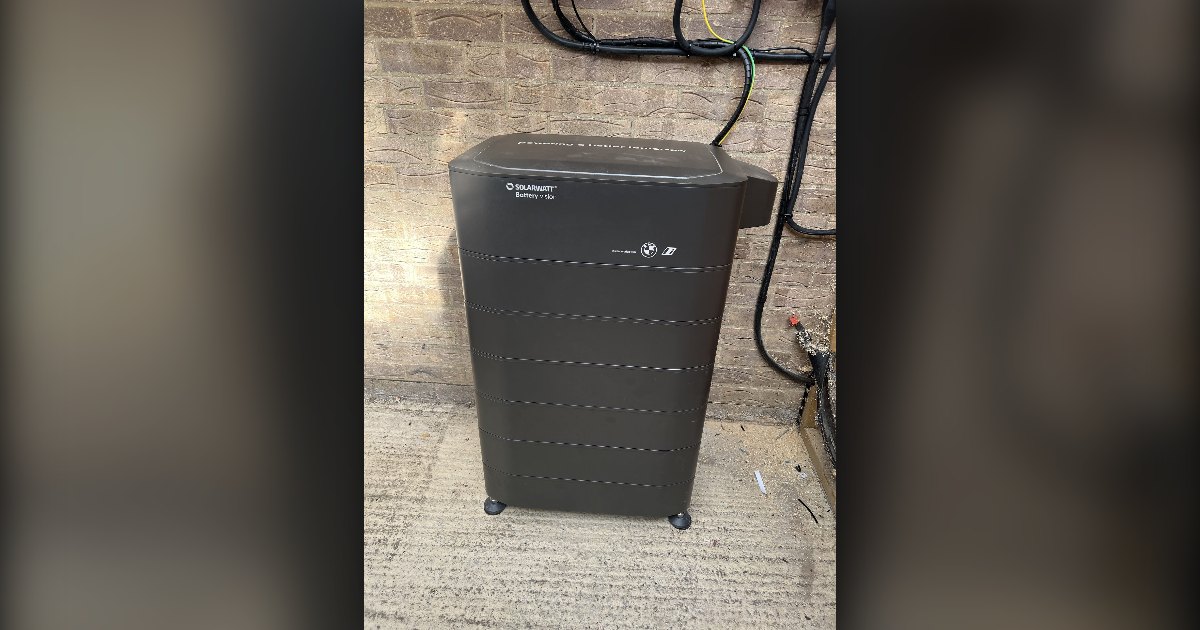
Bigger systems suit heat pump homes, homes with high winter use, or people who want backup cover. They’re usually built from modules or multiple units. The Solarwatt Battery vision 2.0, for example, uses 4.3 kWh modules, with two to six modules per tower giving from 8.6 kWh up to 25.9 kWh, and more towers can be added.
| Battery size | Typically suits | Example |
|---|---|---|
| Around 5 kWh | Smaller homes and lower use | Entry-level systems |
| Around 10 kWh | Typical family homes | Solarwatt Battery vision, 2 modules (8.6 kWh) |
| 13.5 kWh | Larger homes and higher evening use | One Tesla Powerwall 3 |
| 15 kWh and up | Heat pump homes and high winter use | Solarwatt Battery vision, 4 to 6 modules (17.2 to 25.9 kWh), or two Powerwall 3s (27 kWh) |
Solar generation versus overnight charging
A battery can be charged in two ways, and most homes use both.
- From solar: surplus solar from the middle of the day is stored and used in the evening. In summer, a typical 4 kW system can produce more than many homes use, so a battery that soaks up the surplus is valuable. In winter, solar output drops sharply and may only part-fill the battery.
- From cheap overnight electricity: on a time-of-use tariff, the battery charges when electricity is cheap and powers your home when it’s expensive. This works with or without solar, and it’s what keeps a battery useful through the winter.
If you have solar, size the battery around your evening use and a typical summer surplus. If you don’t, size it to cover the gap between cheap-rate windows. Our guide to heat pump running costs shows how big the gap between peak and off-peak prices can be.
Electric vehicle charging
EV batteries are far bigger than home batteries, so most owners charge the car directly from the grid on a cheap overnight rate rather than from the home battery. In that case the EV doesn’t need to be counted in your battery size at all. Where it does matter is daytime charging from solar: if you’re home in the day, it can be better to send summer surplus straight into the car. Plan the EV charger, battery and tariff together so they don’t fight over the same cheap hours.
Heat pump demand
A heat pump is the biggest factor in battery sizing. It can roughly double a home’s annual electricity use, and most of that extra demand falls in winter, when solar is weakest. On cold days a heat pump home can use 20 kWh or more a day.
No home battery will cover all of that, and it doesn’t need to. The aim is to shift as much heating and hot water as possible into cheap hours: the battery charges overnight, the hot water cylinder heats on the cheap rate, and the battery covers the expensive peak. For many heat pump homes, a battery of 13.5 kWh or more, or a modular system that can grow, is worth considering.
Are multiple batteries worthwhile?
Sometimes. Both the Tesla Powerwall 3 and the Solarwatt Battery vision can be expanded, either by adding units or by adding modules. More capacity is worthwhile when:
- your home regularly uses more electricity at peak times than one battery can store, usually because of a heat pump;
- you want to rely heavily on cheap overnight electricity through the winter;
- you want backup power for longer power cuts.
It’s less worthwhile when the extra capacity would only be filled on a few days a year. Each extra kWh pays back more slowly than the first, so it’s usually better to size for a typical day and choose a system you can expand later. A modular battery like the Solarwatt Battery vision makes this easier, because you can add 4.3 kWh modules rather than a whole second unit.
Example homes
These examples show how we might size a battery. They’re illustrative: we always size from your actual usage and tariff.
A family home with solar: one Tesla Powerwall 3
A three-bed home with a gas boiler, 4 kW of solar and an evening use of around 8 to 10 kWh. One 13.5 kWh Powerwall 3 stores most of a sunny day’s surplus in summer, charges on a cheap overnight rate in winter, and covers the evening peak year-round. The built-in inverter keeps the installation simple.
A smaller home without solar: Solarwatt Battery vision, 2 modules
A two-bed home on a time-of-use tariff, with no solar yet. A Solarwatt Battery vision with two modules (8.6 kWh) charges overnight and covers the daytime and evening peak. If solar is added later, more modules can be added to match.
A heat pump home: Solarwatt Battery vision, 4 to 6 modules
A four-bed home with a heat pump, solar and an EV. A Solarwatt Battery vision with four to six modules (17.2 to 25.9 kWh) lets the home charge cheaply overnight and run the heat pump through the peak, while the EV charges directly on the cheap rate. The same home could use two Powerwall 3 units (27 kWh) instead.
From our projects
In our Cheltenham retrofit, a family’s heat pump, solar panels and battery work together, with the battery charged in cheap-rate periods on Octopus Cosy. At our directors’ own 1940s end terrace, solar, battery storage and EV charging are managed together by an energy management system, and you can visit by appointment to see it working.
What does it cost?
Battery storage typically costs from around £4,000 to £12,000 or more, depending on capacity and whether it’s added to solar or fitted on its own. Installations currently have 0% VAT. You may also be able to spread the cost with the government’s Warm Homes Loan Scheme. See our guide to home battery storage with a Warm Homes Loan.
Get your battery sized properly
The best way to choose the right battery is to look at your actual usage, your tariff and your plans for solar, a heat pump or an EV. We install Tesla Powerwall, Solarwatt and BYD batteries across Cheltenham and Gloucestershire, and we’ll recommend the size that suits your home rather than the biggest one we can sell. Get in touch for a free consultation.