
Battery Storage in Gloucestershire
0% VAT on battery storage — confirmed until March 2027
PBT Installations design and fit battery storage for homes and businesses across Gloucestershire — Cheltenham, Gloucester, Stroud, Cirencester, the Cotswolds and the Forest of Dean. A battery doesn’t need solar panels to make sense on its own, though the two work brilliantly together, letting you store and use your own generated power around the clock rather than just in daylight.
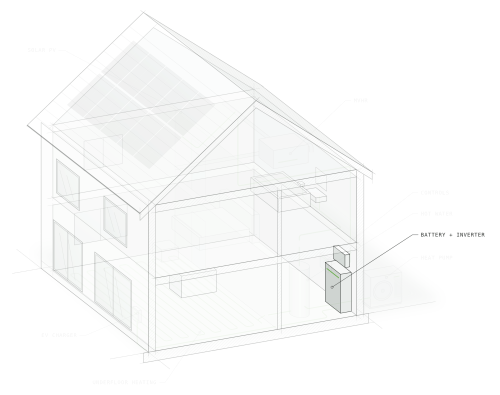
Battery storage — turning solar into a 24-hour strategy
A storage battery transforms solar from a daylight-hours technology into round-the-clock energy independence. It stores the excess your panels generate during the day so you can use it in the evening when demand — and grid prices — are highest.
You don’t even need panels to benefit. A battery on its own lets you buy electricity from the grid when it’s cheap (overnight off-peak rates) and use it when it would otherwise be expensive. Either way, you gain resilience: backup power during outages and real protection from rising energy prices.
Since 2024, the UK government has applied 0% VAT on battery storage systems, which significantly reduces the cost of installation.
Battery storage typically ranges from £4,000 to £12,000+ depending on capacity, whether added to solar or fitted on its own — with 0% VAT on the work.
Battery Storage Installation in Gloucestershire
Battery storage doesn’t need solar panels to make sense — though the two work brilliantly together. A battery lets you buy electricity when it’s cheap and use it when it’s expensive, regardless of whether that electricity came from your own roof or the grid.
How it works without solar: with a flexible electricity tariff, you can charge your battery overnight during off-peak, low-cost hours, then draw on that stored power during the expensive peak period the next day — cutting your bill without generating a single watt yourself. It’s one of the simplest, most direct ways to reduce energy costs on a flexible tariff.
How it works with solar: any excess power your panels generate during the day, beyond what your home is using in that moment, gets stored rather than sold back to the grid for a fraction of its value. You use it that evening instead of buying it back from your supplier at full price.
For heat pump owners: a battery can be used to offset your heat pump’s running costs directly — charging overnight on a cheap tariff and using that stored power to run the heat pump the next day, rather than drawing grid electricity at peak rates.
0% VAT on battery storage: battery storage installations currently qualify for 0% VAT, a relief that’s in place until March 2027 — a meaningful saving on what’s already a serious investment, and one more reason it’s often worth acting sooner rather than later.
The inverter — the brain of your system
Every solar and battery system needs an inverter: the device that converts the energy your panels generate into electricity your home can use, and manages the flow of power between your panels, battery, the grid and your home. It’s one of the most important parts of the whole system, and the brand and specification make a real difference to how reliably everything performs.
On more complex installations — off-grid properties, self-builds, or systems bringing several technologies together — we often specify Victron inverters for their flexibility, smart monitoring and long-term reliability. You can read our guide to Victron inverters here to understand where they shine and whether they’re the right fit for your project.
FAQ
Frequently Asked Questions
Do I need solar panels to get a battery storage system?
No — a battery works perfectly well on its own, using a flexible electricity tariff to buy cheap and use later. Adding solar later is always possible; the two aren’t dependent on each other.
What’s the VAT rate on battery storage?
0%, under current government relief in place until March 2027.
How long does a battery storage system last?
Most systems, including Tesla Powerwall, carry around a 10-year warranty, with gradual, expected capacity loss over that time rather than a sudden drop-off.
Can a battery reduce my heat pump running costs?
Yes — by charging on cheap off-peak electricity and using that stored power to run the heat pump, rather than drawing grid electricity at peak rates.
Case Study
See how we helped our client reduce energy bills
Toby works from home and was relying on thermal layers to keep warm rather than heating the whole house with the gas boiler.
This allows them to run the household at a constant temperature through winter whilst reducing energy bills.
“The battery allows us to shift our energy consumption to cheaper energy windows- we still use the same amount of energy in the house, but we generate it from the Solar Pv, or buy it during cheaper time periods to use at a later date. ”
Spread the cost with finance
We understand a system like this is a significant investment, which is why finance is available on all our installations — Buy now and pay monthly, rather than covering the full cost upfront.
Pete T Limited t/a PBT Installations is an Introducer Appointed Representative of Ideal Sales Solutions Ltd, t/a Ideal4Finance. Ideal Sales Solutions Ltd is a credit broker and not a lender (FRN 703401). Finance available subject to status.