
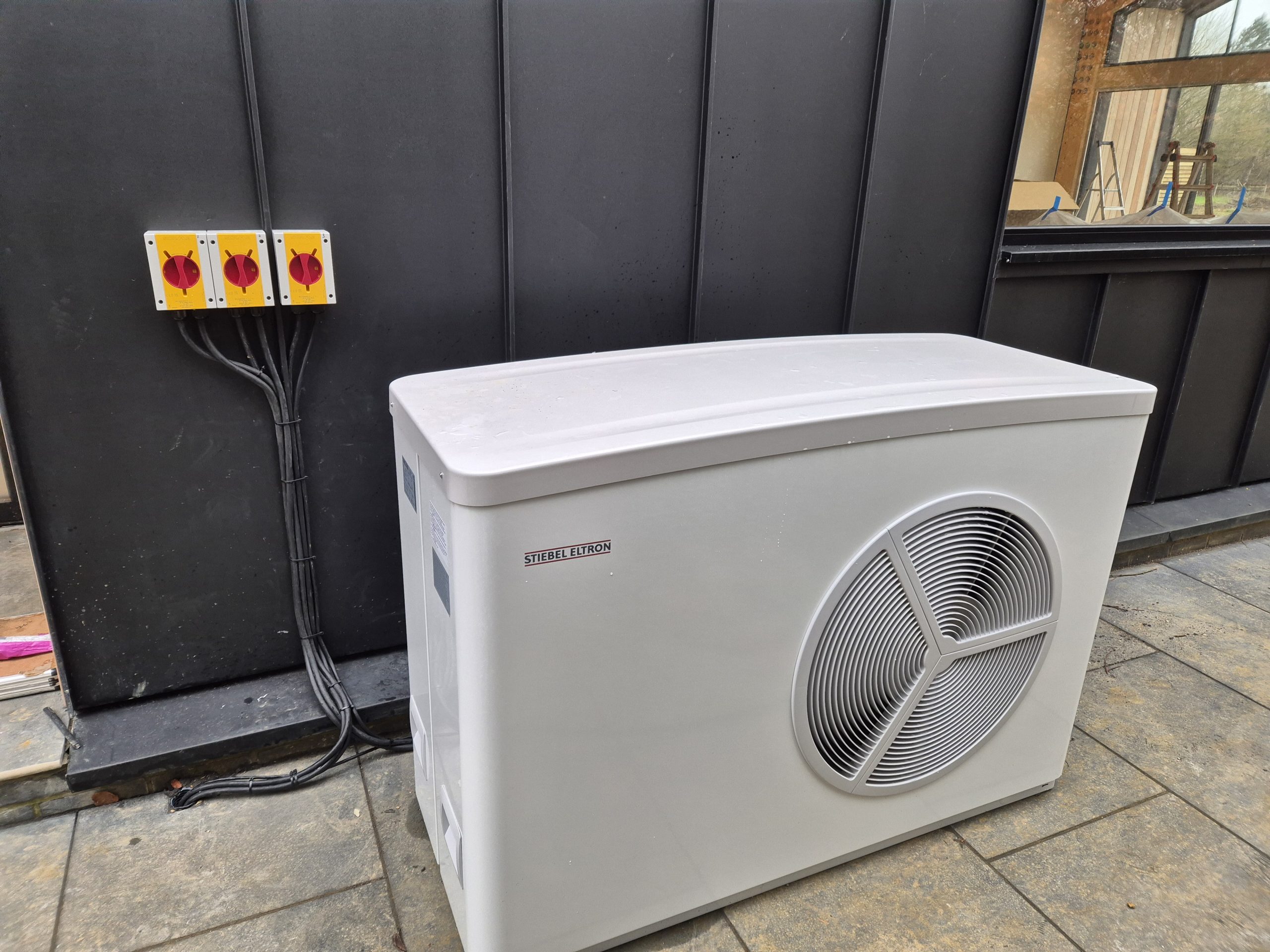
Jody and James were halfway through fitting renewable technology to their new home near Banbury when their installer went bust. We took over the half-finished job as their new heat pump installer, improved the original design and completed the installation of a Stiebel Eltron air source heat pump, MVHR, UNICO system and underfloor heating. If you need a new heat pump installer to finish or fix a job someone else started, this is how we approached it.
At a glance
| Location | Near Banbury, Oxfordshire |
| Property | New build replacing old barns on the site, project managed by the owners |
| Situation | Previous installer went bankrupt halfway through the job |
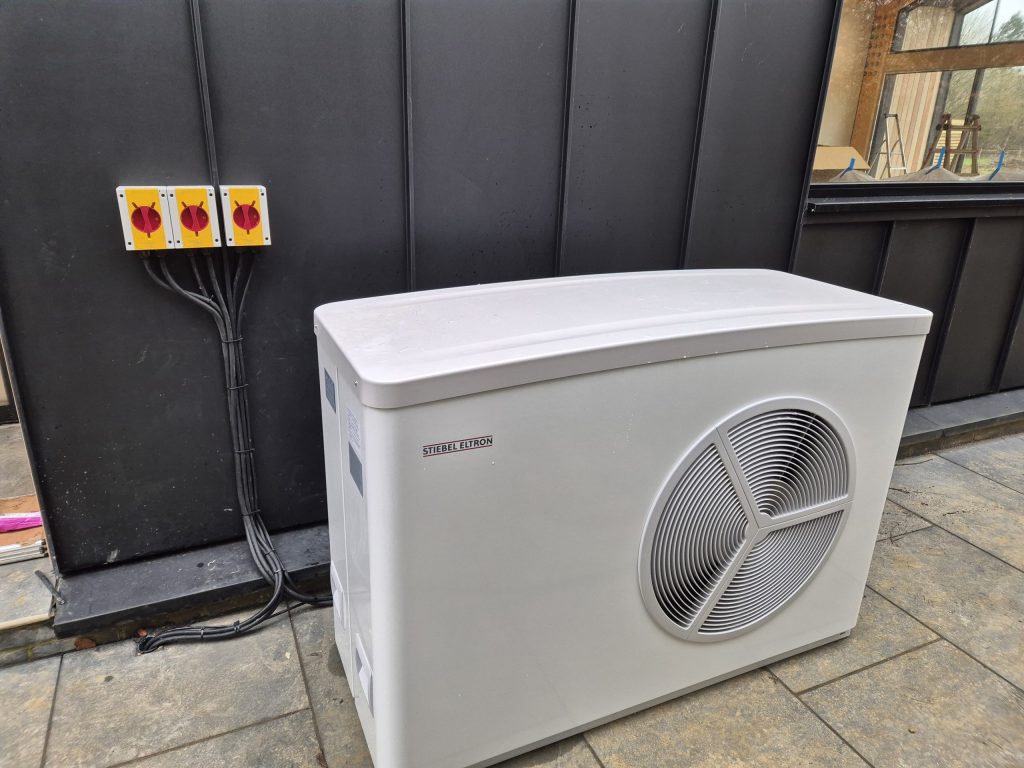
| Heat pump | Stiebel Eltron WPL 25 air source |
| Also installed | MVHR, UNICO system and underfloor heating |
| Solar | 34 solar panels, completed with a Victron inverter by our partner Eco Energy Environment |
| Next step | Battery storage planned |
The brief
Jody and James first planned to upgrade their stone cottage. Their architects suggested converting barns on the land instead, and a Class Q application was made so the buildings could become homes. In the end, it made more sense to take the barns down and build new, and once planning permission came through, the couple started work.
They project managed the build themselves and planned renewable technologies to future-proof the house. Halfway through the installation, the company they had hired to fit them went bankrupt.
Taking over as the new heat pump installer
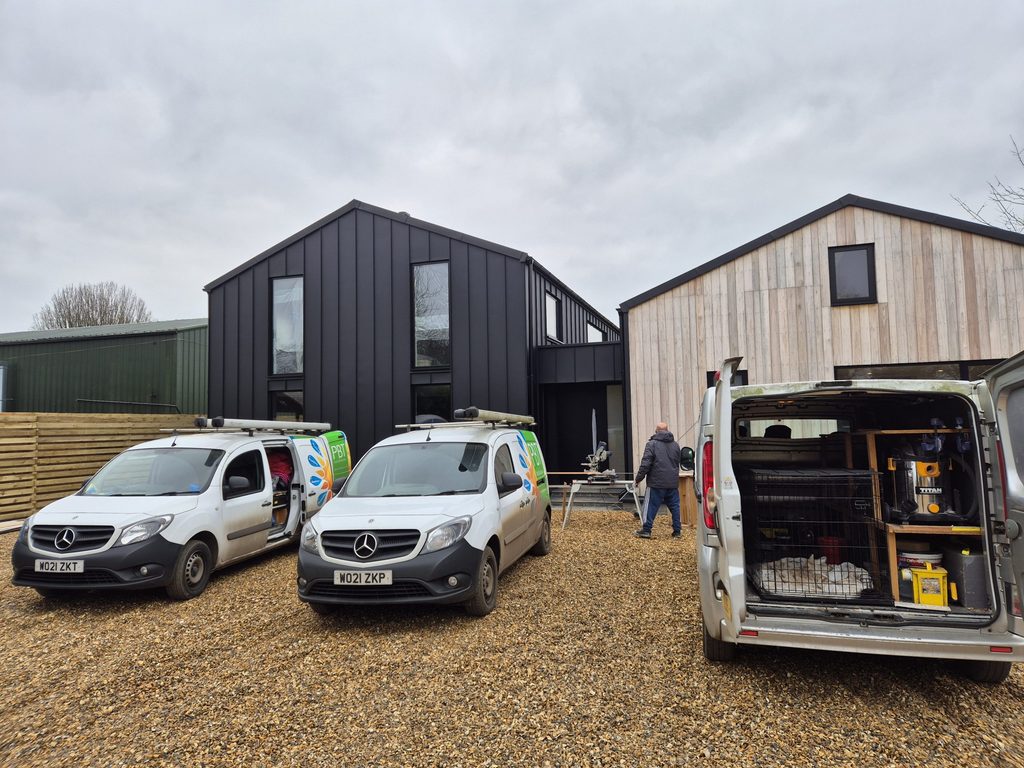
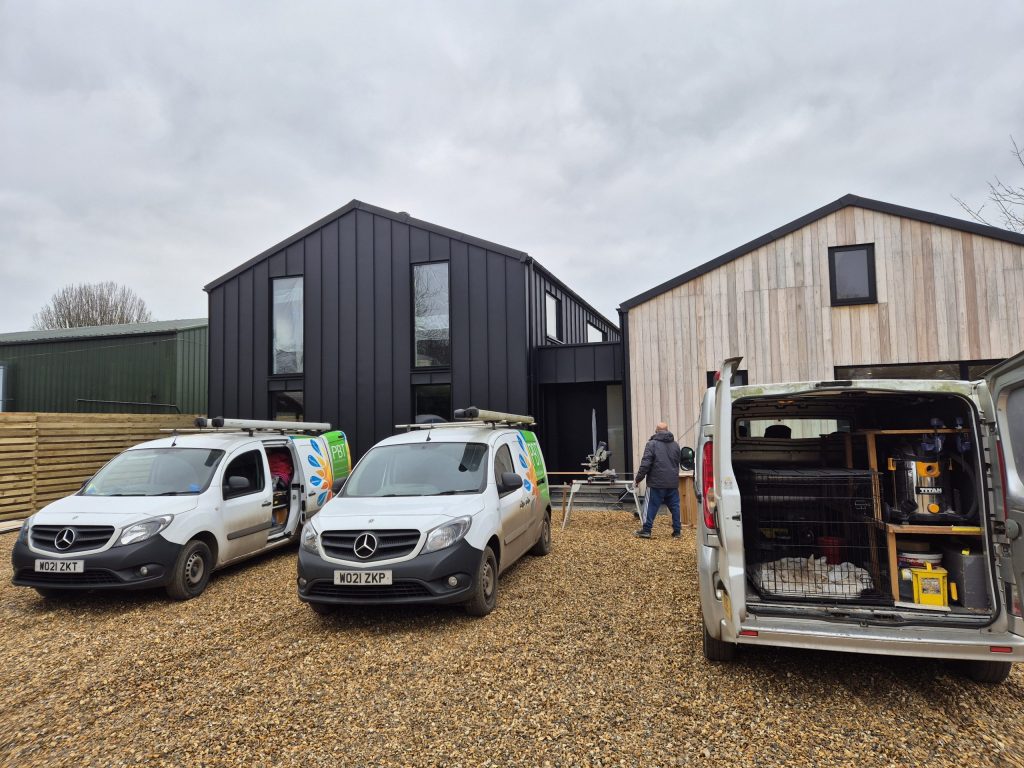
The couple found PBT Installations, who had experience with all the technologies they wanted. After meeting Pete, they felt confident he could finish the half-completed installations.
Pete recommended some changes to the original plans, because he felt the original specification wouldn’t give the best results and that other choices would work better together. We then installed the MVHR, a UNICO system, underfloor heating and a Stiebel Eltron WPL 25 air source heat pump.
The house also had solar panels, but when the original company left, they hadn’t been commissioned and had no inverter. We brought in our preferred partner, Eco Energy Environment, who fitted a Victron inverter and got the panels signed off and working.
The outcome
The couple feel Pete saved the day by stepping into a half-finished job, and they are confident his recommendations were the right ones. We focused on choices that made sense when combining different technologies into one smart home.
With 34 solar panels and battery storage planned, they expect their energy costs to be very low. Jody has always believed renewable technology is the way to go, and they’re looking forward to a comfortable winter in their new home.
What to do if your installer goes out of business
If your installer stops trading partway through a job, start by finding out what has been installed, what has been paid for and what paperwork you have. Check whether the company was MCS certified and a member of a consumer code such as RECC or HIES, as this may give you some protection for deposits and workmanship.
Then get an experienced installer to look at the work before anything else is done. Parts of the system may need checking, finishing or changing, as they did here, before the installation can be commissioned and signed off.
Frequently asked questions
Can a new installer finish a half-completed installation?
Usually, yes. We look at what’s already in place, check it’s suitable and installed correctly, and then complete the system. Sometimes parts of the original design need changing to get the best result.
Why change the original specification?
A specification written by one installer isn’t always the best fit for the house or for how the technologies work together. On this project, changing some choices meant the heat pump, ventilation and heating would work better as one system.
What does a solar inverter do?
Solar panels produce direct current (DC) electricity. The inverter converts it into the alternating current (AC) your home uses. Without one, the panels can’t power anything in the house.
Related
Read more about air source heat pumps, solar panels and battery storage, find out how much a heat pump costs, or browse more projects.