
The Nightmare of a Bad Installation and the Importance of a Competent Installer
Jon and Gillian Chapman bought a house that came with what turned out to be a badly installed heat pump. The heat pump was a Daikin and had been installed by a local company in Gloucestershire whose details were left for the Chapmans by the previous owners. From the start, Jon and Gillian experienced issues with the heat pump. They knew that heat pumps work differently from boilers and should be working at a low level, constantly. However, despite the heat pump working continuously and using a huge amount of electricity, they were not being provided with the heating and hot water they required. Despite the original installation company coming out and fixing a leak and apparently servicing the heat pump, the heat system was clearly inefficient. This case study explains how we diagnosed and put right a badly installed heat pump.
At a glance
| Location | Ledbury, Herefordshire |
| Previous system | Daikin air source heat pump fitted by another installer, which gave poor heating and hot water for more than six years |
| Faults found | Unit on a slant, facing the house and next to a hedge; leaking pipework; poorly protected underground pipes and cables; a boiler cylinder instead of a heat pump cylinder, mounted on chipboard; disconnected pumps; inaccessible expansion vessels |
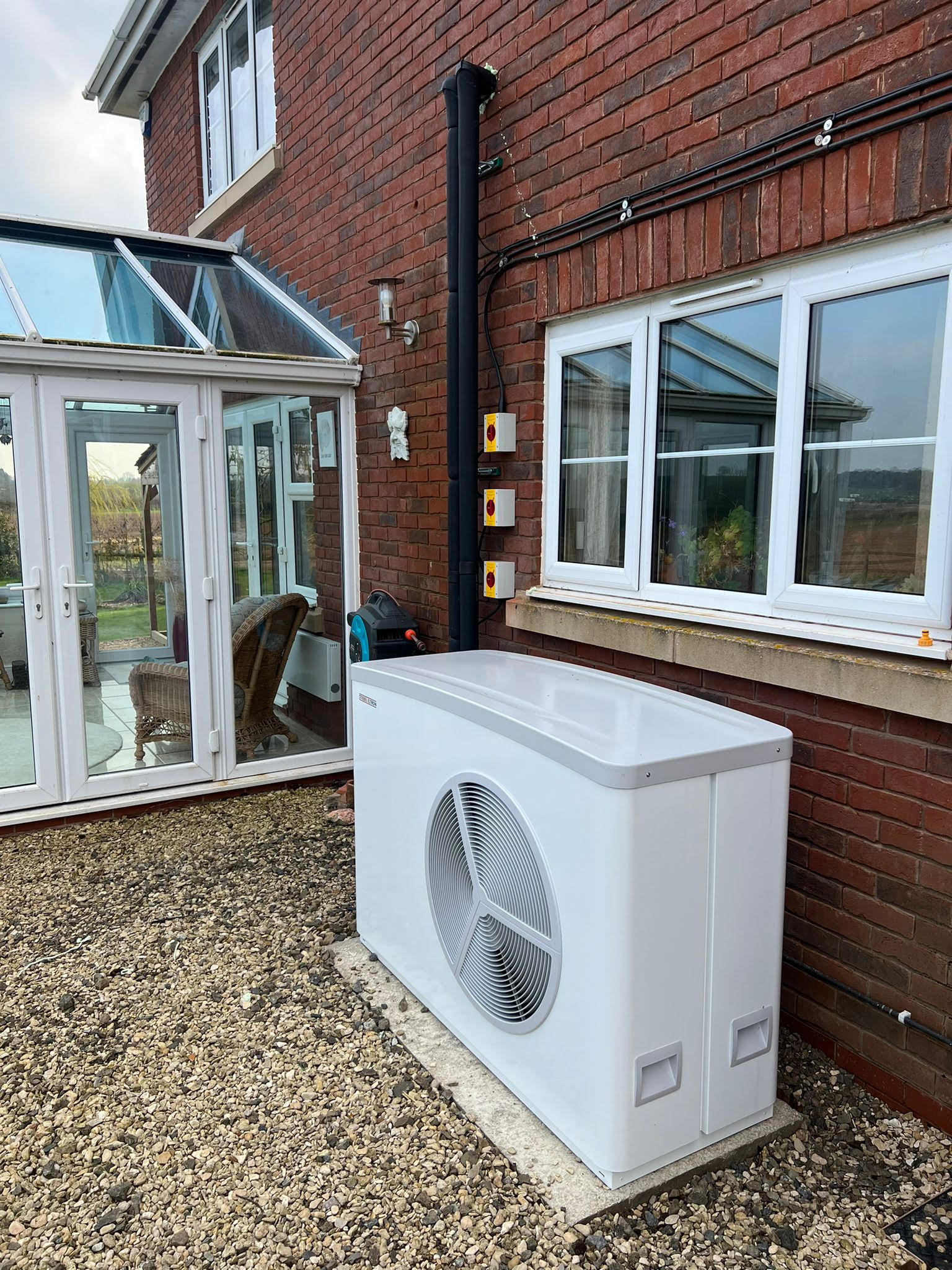
| New heat pump | Stiebel Eltron WPL 25, for heating, hot water and summer cooling |
| Installed | Early 2024 |
| Result | Warm house, plenty of hot water, much lower electricity bills, and the log burner no longer needed |
The couple decided to install solar panels and to get the two technologies working in tandem, however the system continued to provide inadequate heating and hot water. Gillian is technically minded and researched computer programs and solutions to aid the efficiency of their heating system, but to no avail. Part of this research involved speaking with other heating experts and installers, which was how she first came in contact with PBT Installations. She spent time speaking with Pete and found he made a lot of sense, but PBT were reluctant to get involved with repair work for a Daikin system, being specialists in other makes of heat pump. In total, Jon and Gillian lived with this system for over 6 years, each year getting the system “serviced” by the original installers. In this time, they relied on their log burner to keep them warm.
Finally, in December 2023, just after another unfruitful visit by the original installers, the heat pump started making a dreadful noise and the installation company declared the system was now basically obsolete and not much could be done, bar the addition of a £1500 new part that might, or might not, make a difference. Jon and Gillian decided enough was enough and it was time to look at getting a completely new system. They were considering oil and propane, as well as the possibility of a different heat pump.
It was at this point that they got back in contact with PBT Installations, having been impressed previously with Pete’s knowledge and professionalism.
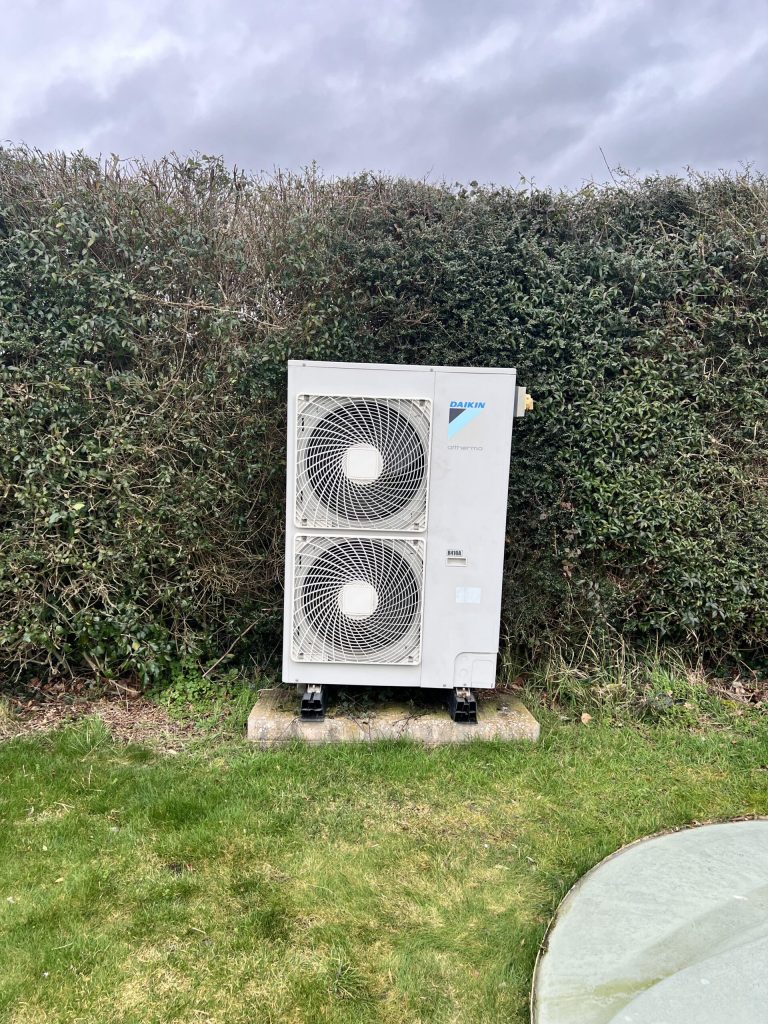
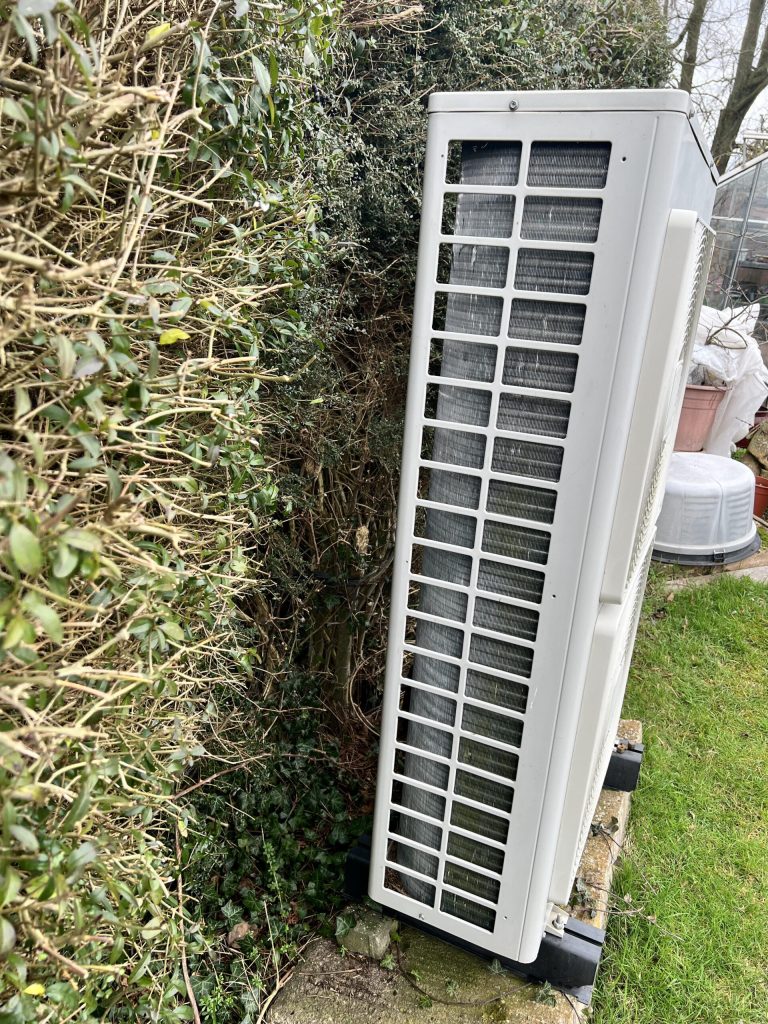
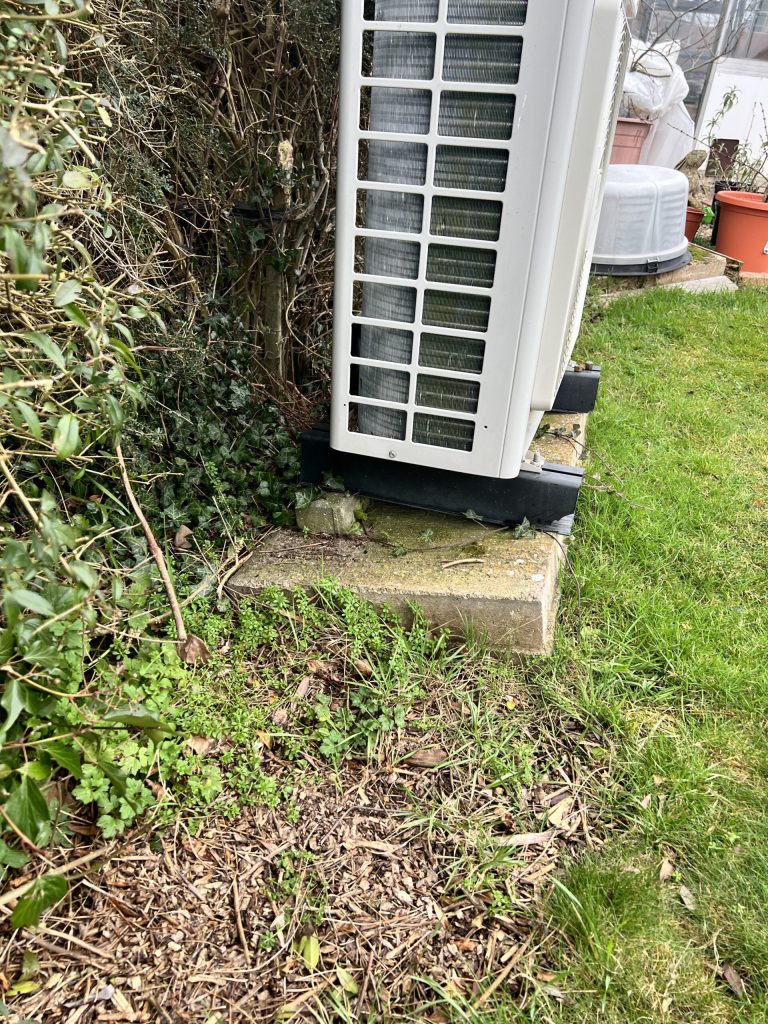
When Pete started looking at the Daikin Installation at the Chapman’s property, he could see straight away that this was a badly installed heat pump. From an initial, visual perspective, he could see that the heat pump was fitted incorrectly on its base, on a slant. It was positioned to face the house so that all the noise was directed directly at the property and the people within. It was installed next to a hedge so that branches were actually growing into the pump.
Pipework was poorly fitted to the heat pump causing leaks. The plant room cupboard which housed the cylinder and where switching happened between hot water and heating, was completely inaccessible – the cylinder was actually behind a door! This indicated that in the 6+ years that the original company had been visiting annually, there was no way they could have actually been carrying out a service.
Hearing Pete talk about what he was discovering, and how a heat pump should actually be installed, Jon and Gillian trusted Pete and his expertise enough to ask him to install a new system for them.
Once PBT Installations began the work, in early 2024, taking out the previous system, the true extent of the bad installation became apparent.
They discovered pipework and electrical cabling which had been fitted underground, but poorly protected and not deep enough, making it vulnerable to damage. The pipework was not well insulated causing energy wastage.
They thought they would be able to salvage the cylinder used by the previous company because it was only 6 years into a 25 year warranty period, thereby saving the Chapmans some money. However, on removing it to relocate it, they discovered that the previous company had actually installed a boiler cylinder instead of a heat pump cylinder. A boiler cylinder is not suitable for a heat pump at all and can drastically reduce the life of the heat pump. Not only this, but the cylinder had been mounted on chipboard. Should the chipboard have got wet (very likely, given the leaking from the bad pipework), it would have crumbled, potentially leading to the whole thing falling through the floor.
When the cylinder was finally removed, PBT discovered more leaking pipework and faulty pumps that had been disconnected and left in place, without working replacements. The expansion vessels were located in inaccessible locations and were filled with water. It really was no wonder that Jon and Gillian had struggled to get heating and hot water.
Once the old system was removed, Pete and his team fitted Jon and Gillian’s home with a Stiebel Eltron WPL25 heat pump, allowing them heating, hot water and cooling for the summer months.
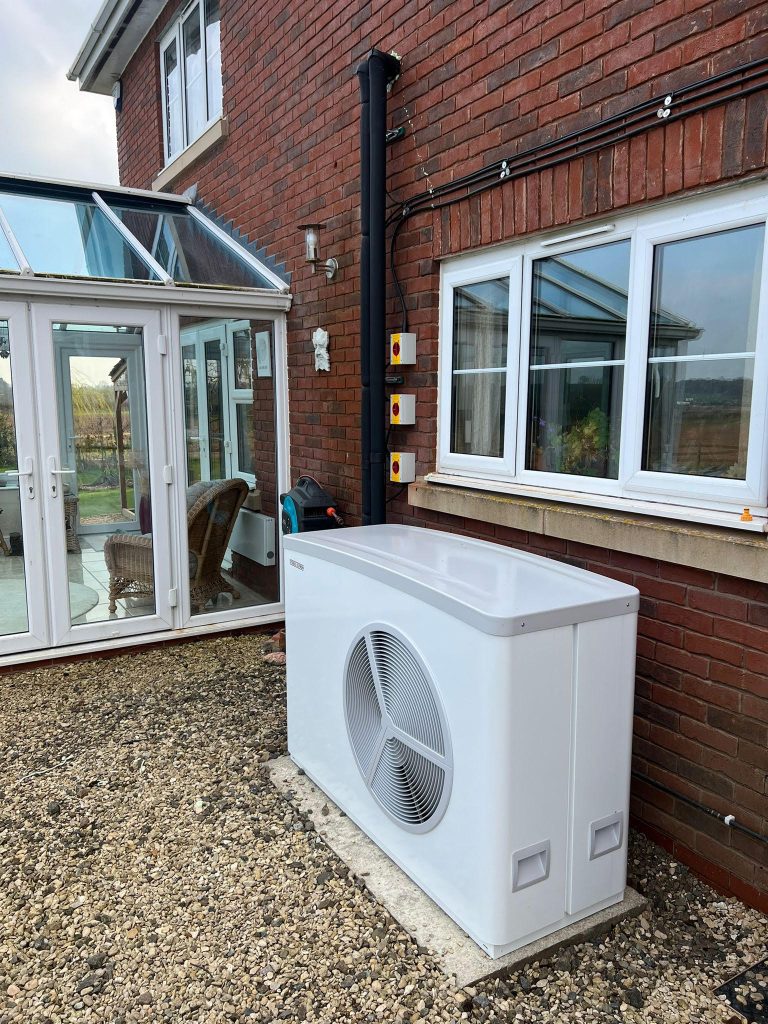
The couple say the new system bears no resemblance to what they had previously. They have hot water and heating that ensures the house is snug even in winter. Their electric bills are vastly reduced. They no longer have need of the log burner and have even had to buy glow logs to make the fireplace look cosy!
Having gone through a journey that had Jon and Gillian considering an oil or propane system, Jon now says that he is absolutely confident in heat pumps as an efficient and economic technology which is capable of providing sufficient hot water and heating. The problems people face are not from the technology itself, but from inexperienced or incompetent installers.
Signs your heat pump may have been badly installed
A well-installed heat pump should keep the house warm and provide enough hot water without huge electricity bills. If yours runs constantly but the house is still cold, the hot water keeps running out, or the bills are much higher than expected, the installation may be at fault rather than the heat pump.
Other warning signs include a unit that is noisy or vibrating, pipework that leaks or isn’t insulated, a cylinder that wasn’t designed for a heat pump, and parts of the system that can’t be reached for servicing.
Frequently asked questions
Can a badly installed heat pump be fixed?
Sometimes. If the heat pump is the right size and in good condition, correcting the installation may be enough. Where the design or equipment is wrong, as it was here, replacing the system is often the better long-term choice.
What should a heat pump service include?
An engineer should check the outdoor unit, refrigerant circuit, pipework, pumps, expansion vessels, cylinder and controls, and look at how efficiently the system is running. That means every part of the system needs to be accessible.
Why does the hot water cylinder matter?
A heat pump heats water at lower temperatures than a boiler, so it needs a cylinder with a much larger heating coil. A boiler cylinder can’t take in the heat fast enough, which leads to poor hot water and puts extra strain on the heat pump.
Related
Read more about air source heat pumps and our technical support, find out how much a heat pump costs, or browse more projects.