

The Project
If you ever wanted to see a property that proves a heat pump can be used anywhere, then the project that PBT have worked on recently on Castlemorton Common near Malvern couldn’t be more appropriate. This cottage heat pump installation shows that an older stone property can be kept warm and comfortable with renewable heating.
At a glance
| Location | Castlemorton Common, near Malvern, Worcestershire |
| Property | Stone cottage from around 1750, with corrugated tin over a thatched roof |
| Heating before | No central heating: one log burner, plus electric oil heaters in very cold weather |
| Heat pump | Stiebel Eltron WPL 17 Classic air source, for heating and hot water |
| Heat emitters | Five radiators, upstairs and downstairs |
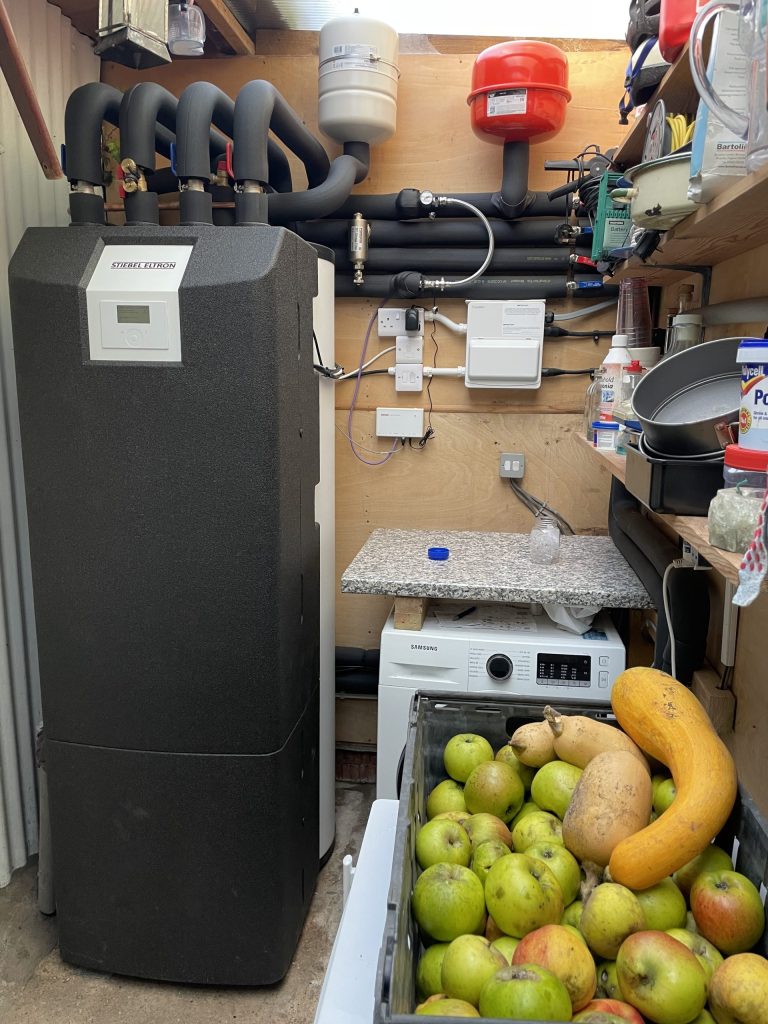
| Cylinder | In a small utility room next to the kitchen |
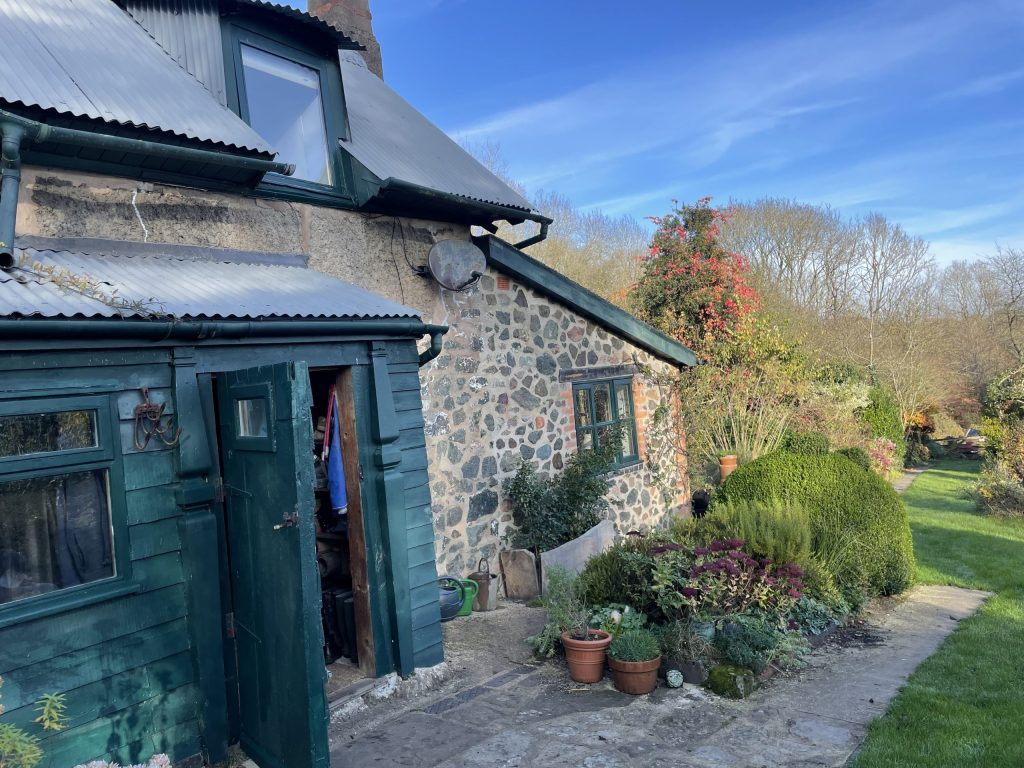
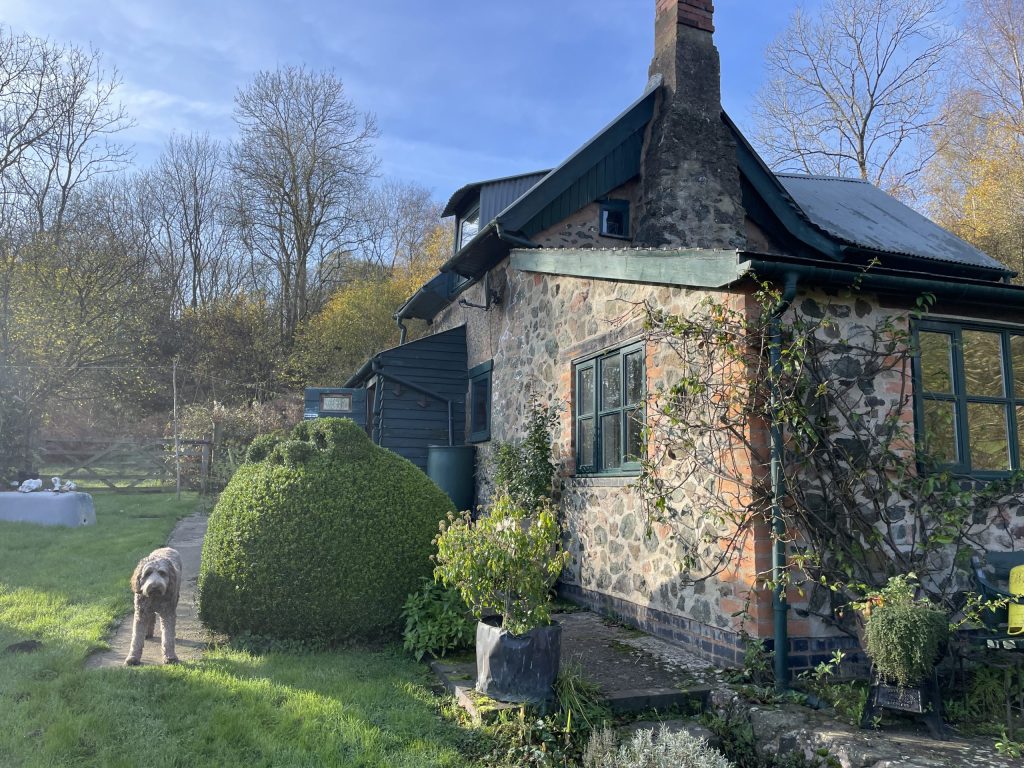
A stone built cottage with corrugated tin sheeting atop thatch as a roof, the property dates back to around 1750. Being situated on the common itself technically allows the property owner to exercise their ‘common rights’ by grazing livestock on the common.
Roger has owned the property since 2005, and living there now with his wife Beverley and three dogs, has slowly and sympathetically added a few ‘mod cons’ to ensure a level of comfort for the family. Most recently, the cottage’s heating needed to be updated, and this was when PBT got a call.
The challenge
Roger and Beverly, until lately, had lived in the cottage with only one log burner for warmth. In especially cold temperatures, they would supplement this with electric oil heaters. This had proven fine for their requirements, but Roger felt that the big annual job of collecting, cutting and storing the logs was becoming less enjoyable with age, and not something he really wanted to do later in life. In addition, Beverley was struggling with allergies to certain types of moulds, which was harder to manage in a colder, damper living environment.
Given that the cottage had no central heating system at all and they were essentially starting from scratch, and wanting to avoid fossil fuel technologies if possible, the couple started to explore the possibility of using a cottage heat pump. It was important to Roger that they try to use a smaller, local company, and having tried and failed with a few installers who didn’t want to come to the remote location, he found PBT Installations.
The cottage heat pump we installed
Roger says that he trusted Pete almost immediately when meeting him, as Pete told him he had visited a number of farmhouses over the years that he did not feel were suitable for a heat pump. Roger felt confident that Pete was not simply trying to sell him a product and installation, but that he genuinely believed it could work in the unique property.
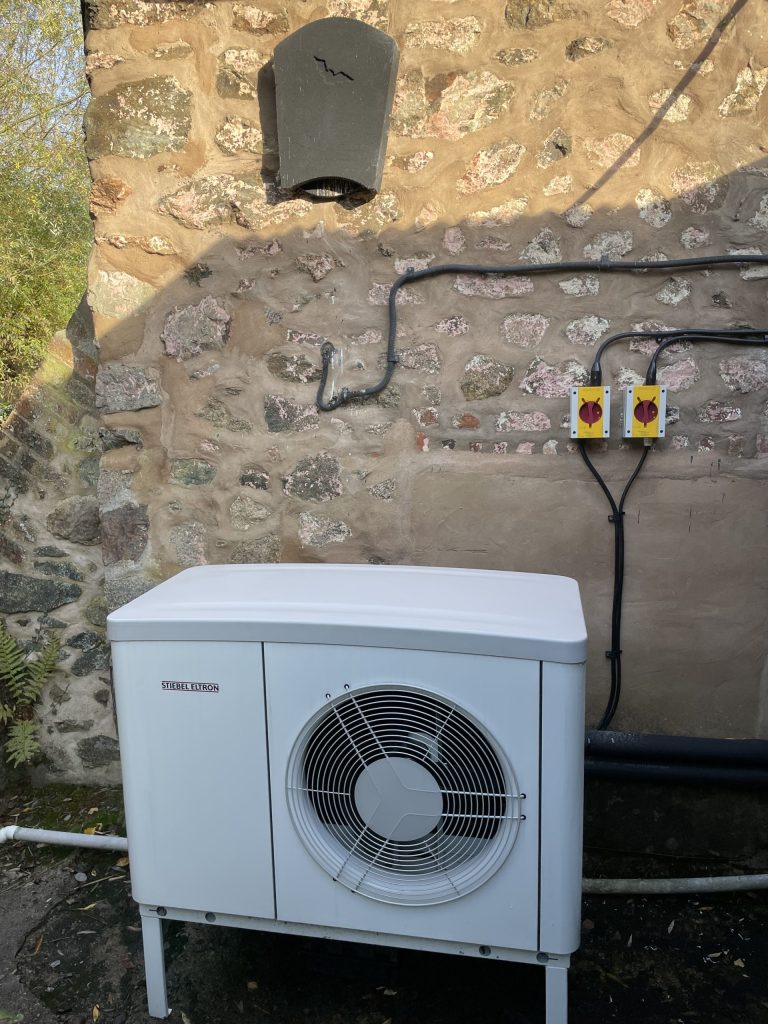
Once the go ahead was given, the installation was pretty straight forward. PBT installed a STIEBEL ELTRON WPL 17 CLASSIC which would easily provide all the required heating and hot water. Five radiators were installed, covering both upstairs and downstairs. The cylinder was situated in a small utility room adjoining the kitchen.
and the outcome!
The couple are certainly a lot snugger now. Beverly says she feels toasty in whichever room she is in, and the dogs certainly look content! They have plentiful hot water, and the comfort the heating brings more than makes up for the missing glow from the log burner. The cottage heat pump itself is tucked away behind the back of the house where it doesn’t get seen and certainly doesn’t get heard.
Roger and Beverly both say they are very happy with the changes they have made and speak highly of the efficient and friendly engineers who carried out the installation. They have installed sustainable central heating to a quirky period property, without compromising the integrity of the building, and most importantly, feel confident about their future in the cottage as they get older.
Can a heat pump work in an old house?
Often, yes. What matters is how much heat the house loses, not how old it is. A room-by-room heat loss calculation shows how much heat each room needs, so the heat pump and radiators can be sized to keep the house warm at the low temperatures heat pumps work best at.
Some older properties aren’t suitable, and an honest installer will tell you so. In this cottage, the numbers worked, and a carefully sized system now heats the whole house without changing its character.
Frequently asked questions
Do I need to insulate before fitting a heat pump?
Improving insulation lowers the heat loss, so a smaller, cheaper heat pump can do the job. But you don’t always need major work first. The heat loss calculation shows what the house needs as it is, and where improvements would help most.
Do I need underfloor heating with a heat pump?
No. This cottage uses five radiators. Radiators just need to be large enough to heat each room at heat pump temperatures, which we check room by room.
Where does the heat pump go on a period property?
Usually somewhere out of sight with good airflow, such as behind or to the side of the house. Here, it sits at the back of the cottage, where it isn’t seen or heard.
Related
Read more about air source heat pumps, find out how much a heat pump costs, or browse more projects.