
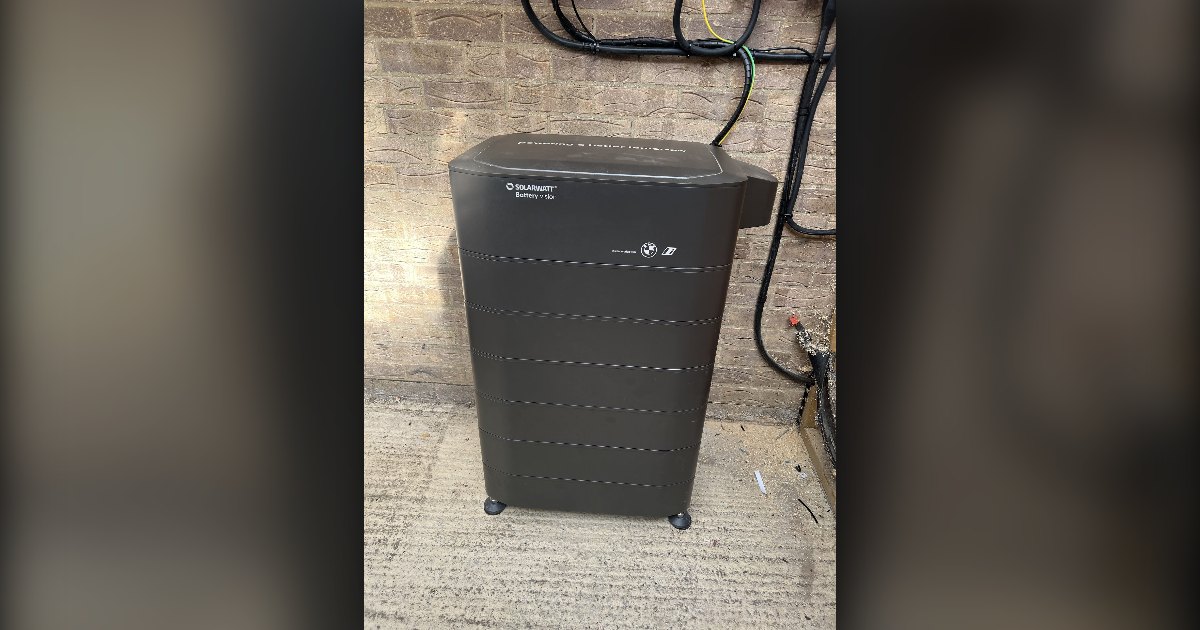
Home battery storage lets you store electricity, from your solar panels or from the grid when it’s cheapest, and use it when you need it. With the government’s new Warm Homes Loan Scheme offering low-cost loans for batteries, sometimes at 0%, and 0% VAT on batteries until 31 March 2027, it’s a good time to look at whether one makes sense for your home.
In short
- Use more of your own solar electricity, instead of exporting it for less than you pay to buy it back.
- Charge on cheap overnight rates and use that electricity in the expensive evening peak.
- Run your heat pump for less, as it’s usually your biggest electrical load.
- Spread the cost with a Warm Homes loan of up to £15,000 for battery storage.
What does home battery storage do?
A battery stores electricity so you can use it later. During the day, it can soak up solar electricity you don’t use straight away. Overnight, it can charge from the grid on a cheaper time-of-use tariff. In the evening, when electricity costs most, your home runs from the battery instead of the grid.
Paired with smart energy management, the system decides when to charge, store or use energy, so you don’t have to think about it.
The benefits of home battery storage
1. Use more of your own solar electricity
Solar panels generate most during the middle of the day, when many homes use the least. Without a battery, much of that electricity goes back to the grid, usually for less than you pay to buy electricity. A battery keeps it for the evening, so more of your solar power is used in your own home.
2. Charge when electricity is cheapest
Time-of-use tariffs offer cheaper electricity at certain times, often overnight. A battery can charge in those cheap periods and power your home through the expensive peak. Our Cheltenham retrofit customers charge their battery during cheap windows on Octopus Cosy and use that energy at peak times.
3. Run your heat pump for less
If you have a heat pump, it’s usually the largest electrical load in your home. A battery lets more of that heating and hot water run on stored solar or cheap-rate electricity. Read more about how to cut heat pump running costs.
4. Less exposure to price rises
The more of your own energy you generate and store, the less you buy from the grid at whatever the price happens to be. That makes your bills more predictable when energy prices change.
5. Backup power, with the right system
Some battery systems can keep essential circuits running during a power cut, if they’re designed and installed with backup in mind. Not every battery does this, so if it matters to you, tell us at the survey and we’ll design for it.
6. Ready for the future
New energy performance certificates, expected from the second half of 2027, are designed to include a smart readiness measure that recognises battery storage working with the grid. A battery also pairs well with an electric car charger. Read whether renewable technology adds value to your home.
How the Warm Homes Loan helps
The Warm Homes Loan Scheme lets homeowners borrow up to £15,000 for home battery storage through approved lenders. The government contributes towards each loan, so the interest rate can be up to 5 percentage points below the lender’s usual rate, and in some cases 0%. The rate you’re offered depends on the lender, the term and your circumstances.
- You can borrow for a battery on its own, or together with solar panels and a heat pump.
- You apply to a lender, not the government, and you’ll need to pass their credit and affordability checks.
- The battery must usually be installed by an MCS-certified installer.
- Batteries also have 0% VAT until 31 March 2027, including batteries added to existing solar panels.
Is home battery storage right for your home?
A battery usually makes the most sense if you:
- have solar panels, or are planning them
- have a heat pump or an electric car, or are planning one
- are on, or willing to switch to, a time-of-use tariff
- use a fair amount of electricity in the evenings
If your electricity use is very low and you don’t have solar or a smart tariff, the savings will be smaller. We’ll tell you honestly at the survey whether home battery storage is worth it for you.
The batteries we install
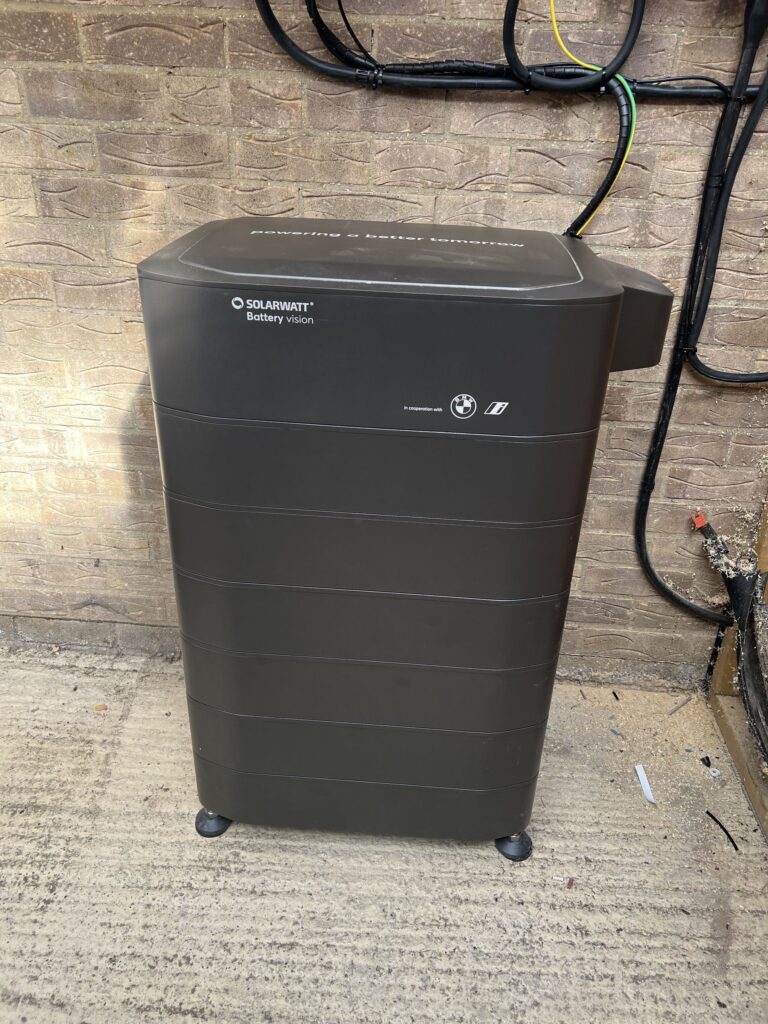
We install Tesla Powerwall and Solarwatt batteries, sized to how your household actually uses energy and designed to work with your solar panels, heat pump and controls as one whole-home system. We also make sure the battery is sited safely, in line with current fire guidance.
What to check before you borrow
- The right size: a battery that’s too big costs more than it saves, and one that’s too small runs out early.
- Warranty and installer: check what’s covered and for how long, and use an MCS-certified installer.
- Whether the loan is secured on your home, the APR, the total you’ll repay and any early repayment fees.
- Who you’re dealing with: only use lenders listed on GOV.UK, and be wary of cold calls about “Warm Homes” loans.
Frequently asked questions
Can I add a battery to my existing solar panels?
Yes. A battery can usually be added to an existing solar system. It has 0% VAT until 31 March 2027, and it can be funded with a Warm Homes loan.
Can I have a battery without solar panels?
Yes. A battery can charge from the grid on a cheap time-of-use tariff and power your home at peak times. The savings are usually bigger with solar, though.
Is the Warm Homes Loan always 0%?
No. The scheme reduces a lender’s usual rate by up to 5 percentage points, and some loans may be at 0%. It depends on the lender, the loan term and your circumstances.
What size battery do I need?
It depends on how much electricity you use, when you use it, and whether you have solar panels, a heat pump or an electric car. We look at your usage and size the battery to suit.
This article is general information about a government scheme, not financial advice. Borrowing is a commitment: check the full terms with the lender, and consider independent advice if you’re unsure.
Talk to us about battery storage
PBT Installations is a Cheltenham-based, MCS-certified installer with over 15 years’ experience. We’ll look at your home and your energy use, recommend the right battery, and give you a clear, itemised quote, so you know exactly what you’d need to fund. We cover Cheltenham, Gloucester, Stroud, Cirencester, the Cotswolds and the Forest of Dean.